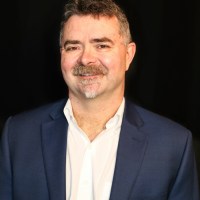
Danez Smith has been writing for more than half of their life now, starting in high school, and it’s a field that has given them a vehicle to express their feelings. It was in a poem that they felt the courage to say they were queer for the first time.
The poet and author will be reading their work at a 12th Night Revel on Friday, April 17, at the Atlanta History Center and then participating in a free public reading at the Auburn Avenue Research Library on Saturday, April 18, as Emory University’s Stuart A. Rose Manuscript, Archives, and Rare Book Library hosts its annual Raymond Danowski Poetry Library reading. It’s all part of National Poetry Month.

Smith is the author of four poetry collections — “[insert] boy” (2014), “Don’t Call Us Dead” (2017), “Homie” (2020), and “Bluff” (2024). For the latter, Smith was a 2025 Pulitzer Prize finalist for poetry. As well, Smith has twice been a finalist in the Individual World Poetry Slam and has won the Lambda Literary Award for Gay Poetry. The artist’s work deals with LGBTQ+ themes, Black Lives Matter, justice, identity, and more.
They have been writing since they were in high school, Smith told Georgia Voice. “Poetry to me, at the time, gave me a place where I could take my place and my thoughts seriously,” they said. “It felt like one of the first places where I could think seriously, intimately, and deeply about the world and the interior of my community and myself and my family. It was this receptacle for the truth in a way that felt really freeing at the time and continues to.”
The author came to poetry through slam and spoken word. The artists Smith met during that time were some of the most interesting people they’d ever been around, and Smith knew then they wanted to be “part of the poets.” It’s also been cathartic and just plain fun.
Smith – who identifies as queer, non-binary, and HIV-positive – tries to write about the world they experience. “The type of poet that I am, and for all poets, I hope there is a call towards honesty. I try to write about the world I see, but I think the vessel that sees that world is important. I don’t think I know any other way to write.”
Smith has family in Georgia, so coming to the area is always special. “I like going to Atlanta. My father and my father’s side of the family are from Atlanta, so it’s a little bit of a homecoming for me,” Smith said. “I have great respect for Atlanta as a capital of Black Southern America. As a fan of hip hop, it’s an important cultural place that I think a lot of roads lead back to.”
The current administration and climate certainly shape them as a writer. Smith laughed that the world has been “f*cked up for a long time,” but what they and fellow contemporaries face is no different than what other artists have dealt with for generations.
“I think about the work of Langston Hughes and how he was writing about the world around him that he saw, sometimes a champion of the people he found in that world but also critical. I think if you are an artist that is worth your salt, then you are porous to the world around you and you understand that part of the artist’s role is to help the people who encounter your work see the world around them with clarity. You also help them imagine what is possible in the world that could be. I don’t think or what my contemporaries have to do is any different than that of Langston Hughes, Jamed Baldwin, June Jordan and Audre Lorde and all those folks that have come before us. Part of the artist’s job is to help others see the world — and put some language to it.”