

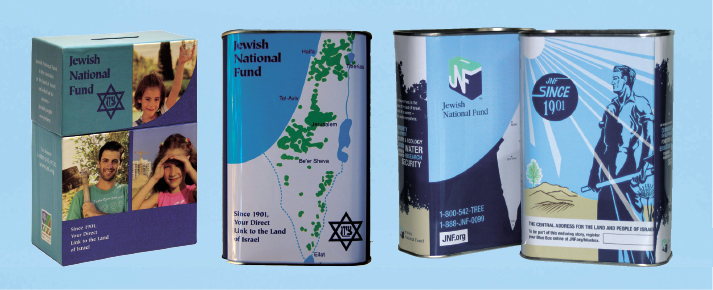
If you grew up Jewish, chances are at some point you had a blue metal box to collect coins for Israel. Maybe you still do.
Since 1901, the Jewish National Fund has distributed those boxes and used the coins they collected from around the world to plant trees, build homes and create infrastructure in Israel.
“It was the biggest-ever grassroots campaign for the Jewish nation,” said Ronnie Porat, Israel Emissary to the Southeast.
Money collected from the blue boxes went to building the modern state of Israel, which was created in 1948. The mountains of coins literally bought land and planted trees and helped people relocate to the new Jewish homeland. “In every Jewish home, from my father’s home in Poland, to homes in Morocco, in China, in Germany, in the U.S., 50, 60, 70 years ago you would find this box,” Porat said.
Millions of the boxes were filled with spare change and returned to the JNF. But countless more still sit on dusty shelves, in attics and childhood bedrooms.
“My mother-in-law passed away. I found two blue boxes in her house. My daughters went to college and I found two boxes in their room,” said Bruce Reisman, the JNF’s community campaign chair. “I’m thinking, ‘Why didn’t you do anything with these boxes?’ They said, ‘We didn’t really know where to send them.’”
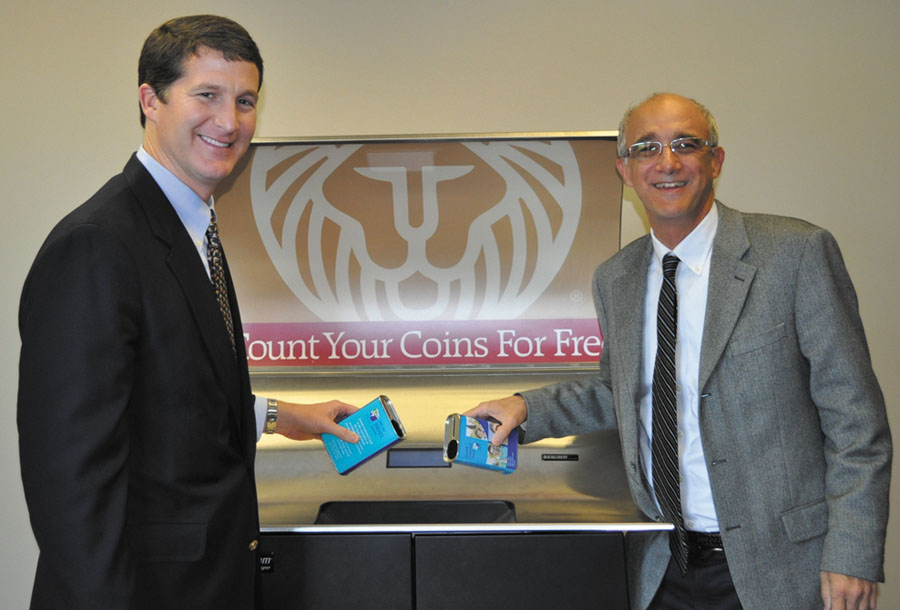
In an effort to reclaim more of those wayward blue boxes, the Atlanta branch of the Jewish National Fund has partnered with Fidelity Bank to provide a convenient way to turn in the money.
People can bring their boxes to any Fidelity Bank branch in Atlanta and use the banks’ coin-counting machines to determine how much money they have collected. The money can then be deposited into a JNF bank account.
Reisman said this is the first bank account the JNF has ever opened outside its national account in New York. He hopes that the Atlanta effort campaign will be a successful model that can be replicated around the country.
For many, the blue box is a symbol of the connection between Jews around the world and the land of Israel.
Reisman said for many years, there was emphasis on distributing and collecting blue boxes in synagogues. But as Israel grew and thrived, fundraising efforts dropped off. Local synagogues took on other projects, and the effort to collect the boxes slowed.
“The symbol of the blue box still lives, but it needs to live for different reasons,” Reisman said. “Israel’s got other issues: community development, education, forestry and ecology, the water crisis.”
Reisman said he also has spoken to many Christians who care about Israel but don’t know the best way to contribute. “We’re trying to educate Jews and non-Jews alike that love the state of Israel that there’s a way to connect to Israel in the Atlanta area,” Reisman said.
Today, the majority of the money collected in blue boxes will go toward combating the water shortage in Israel through water purification and recycling programs and conservation efforts.
“You have the big donors that write the big checks, and we want those,” Reisman said. “But the truth of the matter is the nickels and dimes that we collected in these boxes helped build the state of Israel. Now we need people who want to give, but can’t give the big donor amount, this is their way to give in a small way, but make a difference.”