History. Stories about the way things used to be, the stuff that got us here, the elements that allow us to figure out how and where we proceed.
Seems simple enough, but it’s not. “The winner names the age!” This has been true, and the stories upholding the winners usually leave out women, non-passing queers, the “wretched refuse,” people too poor/too old/too pacifistic or who have the wrong skin color or religion.
Yet, there are queer stories – good and bad – that have gotten us to where we are today, especially the stories about visibility.
And we know visibility has been working because of the pushback being churned up so ferociously. The 20th and now 21st centuries have seen many attempts to invade us, corral us, and thrust us back into the shadows.
Think of the punishment of Greenwich Village women, the 1950s Lavender Scare, the dishonorable military discharges, the library and book blowups, etc.
In June, we feast upon stories of Stonewall, of Sylvia and Marsha. Sometimes we get mentions of “Black Nite Brawl” or Compton’s Cafeteria or other times we rioted to beat back oppression.
Many memories surface this time of year, especially about queer visibility in Atlanta.
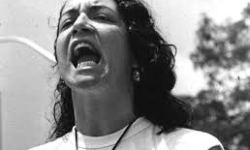
We marched for years with brave souls, facing news cameras and hostile onlookers during Atlanta Pride parades. We gathered at Atlanta City Hall to protest Dan White getting away with the murder of Harvey Milk and told Anita Bryant to piss off. We supported Charis Books & More in Decatur for 51 years.
In the 1980s, Atlanta resident Michael Hardwick fought all the way to the U.S. Supreme Court to repeal Georgia’s Sodomy Law. It would take another decade before Georgia’s Supreme Court would eventually strike it down, but Hardwick would die of an AIDS-related illness before he could see victory. A new book by Martin Padgett called “The Many Passions of Michael Hardwick” is out this month from Norton.
During the AIDS crisis, we responded with caring and political organizing. People marched to remember loved ones, PWAs were pushed in wheelchairs, speakers demanded government involvement, and protest signs abounded.
And Atlanta Pride kept growing in participants: 10k, then 25k, then 100k, then 300k.
Today, Pride provides a way to “show up and show out” (as last year’s theme suggested). But it’s just one among many ways we make community and history. We make history every day, in the ways we live our lives.
We must believe that our lives are not cheap, and we won’t sell them as if they were.
That is actual Pride.
To learn more about Atlanta’s queer history, visit Touching Up Our Roots Project at tuorqueeratlanta.org.