Mr. Bean is a veteran who served as a paratrooper during Desert Storm. He was living in a tent in downtown Atlanta. We followed him as he packed up everything he owned and got to unlock the door to a home of his own. He had a job interview that afternoon.
This is just one story of a real person who found housing. We were just lucky enough to be there to capture it.
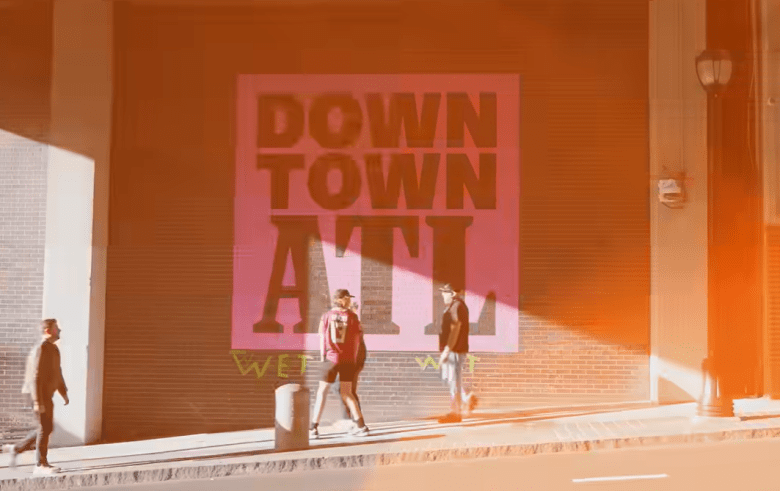
In fact, we spent weeks in downtown Atlanta making a documentary about what is happening on these streets. People are moving from tents into housing because organizations across the city committed to working together.
Atlanta should know this story.
Why here
I have spent nearly two decades documenting homelessness in cities across the United States, the UK, and Canada. In that time, we’ve seen most cities respond to public pressure with sweeps, but those sweeps do not solve anything. People get pushed a few blocks, and the city asserts that the problem’s been solved. We have filmed that story more times than we care to count.
Atlanta is not that story.
Sure, the World Cup brought global attention to this city, so one might expect the same pattern: a temporary cleanup, designed to look good on camera and disappear afterward. Instead, we found a system that is actually working, in real time.
What we saw
Our film follows Atlanta Rising, a Partners for HOME effort that set out to move 400 people from Atlanta’s streets into permanent housing in its first phase. It has since surpassed that number, and more than 600 people are now housed as a direct result.
We watched the average time it takes to get someone from a tent to a lease drop to 48 days, compared to a national average of 166 days. We toured Ralph David House, a roadside motel from the 1950s that has been rebuilt into 56 units of permanent supportive housing and now sits on the National Register. We watched outreach workers with Mend Culture and SafeHouse Outreach return day after day, checking in with people, updating them on progress and move-in dates, and connecting with new people looking for help.
This is unscripted documentary filmmaking. What we captured was actually happening. As one person working within this system told us, this is “building on the muscle we have been building for the last ten years.”
That stuck with us, because it is the opposite of just another cleanup.
Why Atlanta should watch
Thirty years ago, I was homeless on Hollywood Boulevard after a successful career in the television industry. Knowing what it feels like to have nowhere to go is why I’ve spent nearly two decades documenting homelessness. There is a real difference between reading that a system is working and watching it happen. Statistics are easy to scroll past. A veteran unlocking the door to his own apartment is not.
In that time, I watched what moves people to act. It is almost never a business model or idea that motivates but the faces of real people that foster change.
That is why this documentary exists. Atlantans need to watch real lives change because their city is committed to programs that provide the time and care to create life-altering moments.
But if these personal victories don’t move you, there is also a clear financial case worth stating.
Rent for a supportive housing unit in this system costs roughly $1,100. A single emergency room visit costs $12,000. Keep one person out of the emergency room for a single time, and the housing has already paid for itself. That is not a talking point. That is math. And it is a clear indicator that community-wide systems produce long-term change.
What happens after the cameras leave?
I want to be honest. The work we documented is real, but it is not complete.
The real measure of progress is what happens next. We did not find a system built for a single moment. We found a system built by people working quietly for a decade, who happened to have a global spotlight land on their city this summer, and who intend to keep doing this work long after that spotlight moves on.
Atlanta deserves to see its own story told honestly, and it deserves to be celebrated. Watch it. Then decide if what you see looks like just another cleanup or something that the city should continue to invest in and support.
That is how you keep Atlanta Rising.