

The Sandy Springs Police Department says 58 percent of the city’s violent crime in 2011 emanated from the city’s 71 apartment complexes.
The City Council wants options to deal with it, but the law limits its ability to control what goes on at private properties. One suggestion is buying up the older apartment complexes and razing them, but council members said all options are being considered.
“If you consider the outright purchase of some of these properties it may be the only way to bring about the result the council wants to see,” City Manager John McDonough told the council at its recent annual retreat.
Dunwoody is taking a similar approach to the city’s apartment properties. City leaders wanted to buy the Dunwoody Glen apartments to build a sports complex. That idea was scrapped when voters in November rejected a bond referendum intended to pay for the purchase.
Dunwoody City Council also recently bought the old PVC Farm on North Shallowford Road, which was zoned for apartments, paying $6.1 million. The city plans to turn it into a mixed-use development.
The residents of some of the city’s most troubled apartments have written online reviews describing their experiences living there. The phrase “hell hole” appears a number of times.
Sandy Springs Deputy Police Chief Kenneth DeSimone gave council members more details about apartment crime at their work session meeting on April 3.
The department is beefing up its presence around complexes, he said, telling the council that apartment complexes are visited twice a week by an assigned community officer. The police department is combating the problem with directed uniformed patrols, residential checks and traffic enforcement.
Angela Parker, the city’s director of community development, said the city also uses its code enforcement process to deal with the problem. She said the code enforcement office inspects the buildings annually and issues a certificate of compliance.
Failure to meet city codes must be re-inspected, she said. The city also conducts “code enforcement sweeps,” unscheduled spot checks of single apartment complexes and issues citations when necessary.
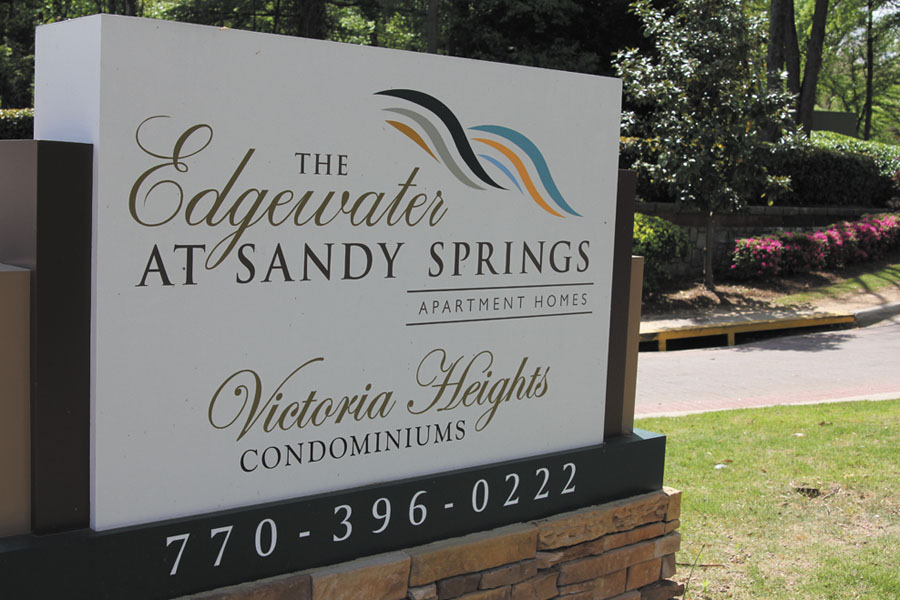
Some problem complexes are undergoing renovations, DeSimone said. The Reserve at Ridgewood on Roswell Road is undergoing a year-long construction and improvement project. Edgewater at Sandy Springs on Roswell Road is under new ownership and a $4 million to $5 million upgrade is planned. The apartments at 550 Abernathy solved its problems when it stopped renting to Art Institute of Atlanta students, DeSimone said.
The department has also created an Apartment Complex Research Committee with representatives from the city’s fire and code enforcement departments and the Atlanta Apartment Association.
The city doesn’t currently know how many of its residents reside in these apartments, which have about 20,000 units. DeSimone said it’s difficult for the council to direct owners of apartment complexes to enforce limits in the number of residents living there or require background checks of every applicant. He said if owners want to turn over a list of residents to the police department, it could check to see if they had warrants and make arrests.
But the city wouldn’t be able to force apartment owners to do that, City Attorney Wendell Willard said.
“It’s hard to control what’s done outside our own boundaries,” Willard said.
Councilman Chip Collins said the city could also provide incentives for owners who take extra steps to weed out criminals from their property, like giving them special recognition from the city.
Some members of the City Council said buying the properties might be a good option.
“That’s still being examined,” Councilman Gabriel Sterling said. “It’s just being evaluated.”
Councilwoman Dianne Fries said she’s interested in hearing more about the idea. “It’s something we ought to look into,” she said.
