An aging apartment complex in the historic Poncey-Highland neighborhood has been acquired by a locally owned real estate firm that promises to maintain its legacy.
Covering nearly a city block, four gray buildings make up the century-old North Highridge Apartments at the corner of North Avenue and North Highland Avenue. The new owner, Canvas Companies, said improvements will be made to the apartments, but the existing footprint and structures will remain the same. Tenants are expected to remain through their current leases.
Canvas is owned and operated by Michael Garber and Benjamin McLoughlin, who told Rough Draft they look for authentic, unique neighborhoods in which to invest.
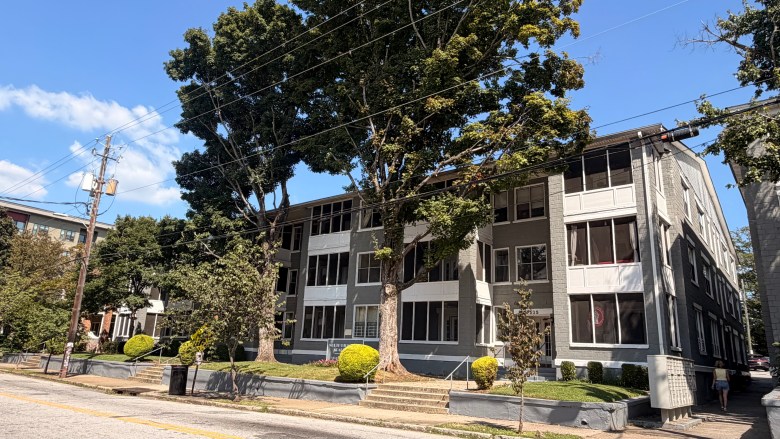
The company purchased North Highridge Apartments for an undisclosed amount from developer Thomas Carmichael, who owns other parcels in Poncey-Highland. The complex is known for affordable rents and residents who walk to nearby jobs.
“We focus on Intown Atlanta assets with a historic story and an irreplaceable fabric to them,” Garber, who lives in the city, said. “We like to buy and build in the neighborhoods that we’re a part of.”
Garber and McLoughlin have been active members of neighborhood boards and Neighborhood Planning Units (NPUs) and aim to be part of positive change, Garber said.
“We’re catering to ourselves, to our neighbors, to our friends. It’s important to us. Oftentimes, folks think of real estate development companies as these big corporate institutions, and we are far from that. We put a lot of thought and care into everything we do,” McLoughlin said. “We never do anything without intention.”
Records show that North Highridge Apartments were furnished apartments for rent dating back to 1921. The apartments were located near three streetcar lines, a dry cleaner, a grocery store, and a few churches.
“We need to get our feet under us and see what needs repairs or replacements, but the plan is to continue to own and operate the apartments because of their history and their legacy,” Garber said.
Poncey-Highland neighbors worked for three-plus years to create a historic district zoning unique to the area.
Approved by the City of Atlanta in 2019, Poncey-Highland Historic District aims to preserve the neighborhood’s unique historic character and buildings while allowing property owners the flexibility to improve their homes and businesses. The zoning preserves building facades but property owners are permitted to modify and expand buildings in the rear, including additions that increase height. There are no restrictions governing exterior paint colors or residential landscape design.

In 2021, Canvas bought the former boutique hotel Highland Inn – also owned by Carmichael, who had filed with the city to demolish the inn. Canvas restored the building to its 1920s purpose, opening Otto’s apartment hotel. The attached retail strip called Highland Row has been leased to local entrepreneurs including Madeira Park, Gallery Chimera, Secondwind Gear Shop, and The Zero Co.
Tenants of the small strip have been happy with Canvas’ management, according to Tim Willard, Madeira Park’s sommelier. Willard described Canvas as “good people who want their tenants to succeed. They’re making really smart moves that are good for business and make it easy to be a tenant.”
Willard said when Madeira Park moved into Poncey-Highland, the business was embraced by the neighbors, diverse in age and ethnicity. Several Madeira Park employees live in the neighborhood, as close as next door at Otto’s. Willard appreciates the “work where you live” concept the neighborhood provides.
Willard has noticed that customers from Morningside and Virginia-Highland to Inman Park and Old Fourth Ward are walking to the restaurant and wine bar.
“Little did we know the neighborhood would show us so much loyalty and love,” he said. “There’s just this really great momentum around independent hospitality right now, and we couldn’t be more thankful to be part of that.”
Garber said he and McLoughlin have always bought real estate property in neighborhoods where they live and spend time.
“Both of us have always said that we’d never want to own or operate a building that we weren’t proud to show our parents,” Garber said.
McLoughlin added: “And now our kids.”