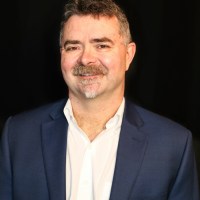
While out director Ira Sachs was working on the film “Passages” with actor Ben Whishaw, he discovered Linda Rosenkrantz’s book “Peter Hujar’s Day.” He thought it would make an interesting next project for him and Whishaw to collaborate on.
“I knew that we shared an interest in queer history, specifically queer artists like Peter,” Sachs said. “By the time I finished the book, I said ‘Let’s make a movie of this.’”
The film is based on a taped conversation between Rosenkrantz (Rebecca Hall) and trailblazing queer photographer Hujar (Whishaw), in which the artist talks about a day in his life in New York in the 1970s. He tells Rosenkrantz about his daily activities, including his interactions with the likes of Allen Ginsberg, William Burroughs, and Susan Sontag. “Peter Hujar’s Day” opens Nov. 28 in Atlanta.
The director knew about Hujar and his work before he read the book.
“I had seen his photographs first in the early ‘90s. He died in ’87,” Sachs said. “I knew more initially about David Wojnarowicz, who was his friend and partner and mentee. Once I discovered Peter’s work, though, I pretty much sought it out whenever I could find it.”
Once he decided to make the film, Sachs’ first stop was The Morgan Library & Museum where the original transcript of the conversation between Hujar and Rosenkrantz has been archived. He found certain passages which had been edited out of the book and brought them back into his screenplay.
His goal was to shoot the full and extensive dialogue between the two characters. The challenge, however, was how to make it cinematic, especially since the action takes place over a single day largely in a single room.
“What I had to do was release any idea that this would be exactly like how they did it on the day,” Sachs said. “I did something very different. I broke down the conversation between the two of them into about 25 different scenes. Within the apartment there are six or seven different locations. So I tried to make the material more cinematic than it might initially appear.”
The director describes the relationship between Hujar and Rosenkrantz as beautiful. It was a friendship filled with trust.
“Peter could tell she really cared about him,” Sachs said. “That was inherent in what I learned about the relationship, but it’s also something Rebecca Hall managed to emphasize in her performance. She is telling a story of a woman loving a good friend in a way that is very deep and quite emotional. “
Having worked with Whishaw on “Passages,” Sachs knew that his lead actor had versatility. What shocks him about Whishaw’s performance in “Peter Hujar’s Day” is how he was able to make every word vivid and alive.
“Nothing is lost, and it’s 55 pages of text that he inhabits in such a full way,” Sachs said. “I think it’s a unique part that gives him a lot of room to shine and stretch in a way that maybe he hasn’t always had in cinema. He’s not frightened by the unknown and it’s like being in a playground with him because he will try anything with an incredible amount of commitment.”
Both Sachs and Hall got to know the real-life Rosenkrantz, and Sachs appreciated the tenderness the actress brings to the role as well as the way she created a story between the two main characters almost without language.
“Rebecca is both technical and free,” Sachs said.
Hujar is widely known for a picture that served as a recruitment poster for the Gay Liberation Front in the wake of 1969 police raid on the Stonewall Inn. He was an integral part of the queer artistic community in the East Village, a community the director calls seminal and unique in the history of American art. Their work was both political and highly personal.
“Artists such as Peter and Charles Ludlam and Jack Smith – these people were making art for each other in a certain way,” Sachs said. “There was a lack of interest in the world outside which I think created a kind of freedom and bravery, because they wanted to impress each other and pay attention to each other. They inspired a kind of creativity that we have not seen in the city since then.”
Sachs believes that Hujar did not receive his due as an artist. He died due to complications from AIDS 13 years after his conversation with Rosenkrantz. He was 53 years old.
“It was way before he should have,” Sachs said. “I think AIDS just wiped out this whole world that I am still receiving so much inspiration from.”
In addition to “Peter Hujar’s Day” and “Passages,” the director is known for queer work such as “Keep the Lights On.” He has succeeded in making work that is personal, but feels for many queer artists, there is not an economic engine to support their work.
“Many of my brothers and sisters who started out making queer cinema have not been able to sustain those careers because of a lack of an economic structure,” Sachs said.
To that end, 15 years ago he started Queer|Art, a non-profit in New York that supports artists making queer stories.
“We have to support each other if we are going to make this work happen,” he said. “For me the work I like best is that which feels specific and personal and intimate and authentic. That is why I was drawn to this [project]. It brings to life a world that to a great extent has disappeared.”