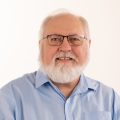
Judy Schancupp joined 21 middle and high school teachers and staff from Holocaust centers in nine states for an intensive three-day academic program exploring topics addressing the history of the Holocaust.
The Jewish Foundation for the Righteous (JFR) Advanced Seminar for Holocaust educators was a graduate-level program in which educators who are well-versed in Holocaust history study more focused topics relating to it presented by world-renowned lecturers.
Schancupp is the program coordinator for the Georgia Commission on the Holocaust in Sandy Springs. Other participants were from Alabama, Florida, New Jersey, Pennsylvania, South Carolina, Texas, Virginia, and Washington.
Antisemitism was a big topic for educators during the three-day seminar in Newark, New Jersey from Jan. 14 through Jan. 16.
“By attending this intensive, graduate-level program, educators will gain a deeper understanding of the history of the Holocaust, which will increase their effectiveness in the classroom and enable them to mentor other colleagues who teach the subject,” JFR Executive Vice President Stanlee Stahl said.
The JFR and the Georgia Commission on the Holocaust are both nonpolitical, Schancupp said. And a lot of non-Jews attended the seminar who are committed to teaching about the Holocaust.
The seminar held discussions on historic antisemitism and brought it up to what’s happening today. She said antisemitism is the longest hatred and is still going on today as seen in swastikas marking local neighborhoods and synagogues.
“What we’re dealing with now is something that we talked about at our seminar, which is the internet. So misinformation and hate information is out there,” Schancupp said.
People read a few lines online and think they know something, she said.
“They pick a side, but they don’t do critical thinking. We want to teach students again how to be critical thinkers, that’s important,” Schancupp said.
She said it’s difficult to combat the misinformation. The Georgia Commission on the Holocaust does this through its ongoing programs. These include taking Holocaust survivors and their children to speak in programs at schools across the state.
“This testimony is important because when people hear what Jews experienced during the Holocaust, they realize that these are real people and not numbers. These were real families,” Schancupp said. “This seminar reinforced to me the importance of eyewitness testimony and second-generation testimony because it makes it a human event.”
People can find information from a historical perspective on reliable websites and through programs put on by agencies like the commission, she said.
“We’ll teach you about the Holocaust and what happened and the history and what happens when we allow a government like the German government to do what they did. And it’s an extensive history,” Schancupp said.
Some of the websites Schancupp suggested include www.israeled.org (Center for Israel Education) to aid in understanding today’s Middle East conflict. The Jewish Foundation for the Righteous, which sponsored the seminar, is another. Another site to check out is the U.S. Holocaust Museum. The Georgia Commission on the Holocaust’s own website is another online source.
Those eligible to attend the JFR’s seminar were JFR Alfred Lerner Fellows, who had already attended the JFR Summer Institute for Teachers. That summer program normally is held in June, but was held virtually during the pandemic. This was the first year for the return to an in-person advanced seminar.
Speakers included Professor Emeritus Peter Hayes of Northwestern University; Professor Jeffrey Veidlinger of the University of Michigan; Professor Paul Hanebrink of Rutgers University; and the Education and Public Programs National Archives and Records Administration Director Nicholas Coddington.